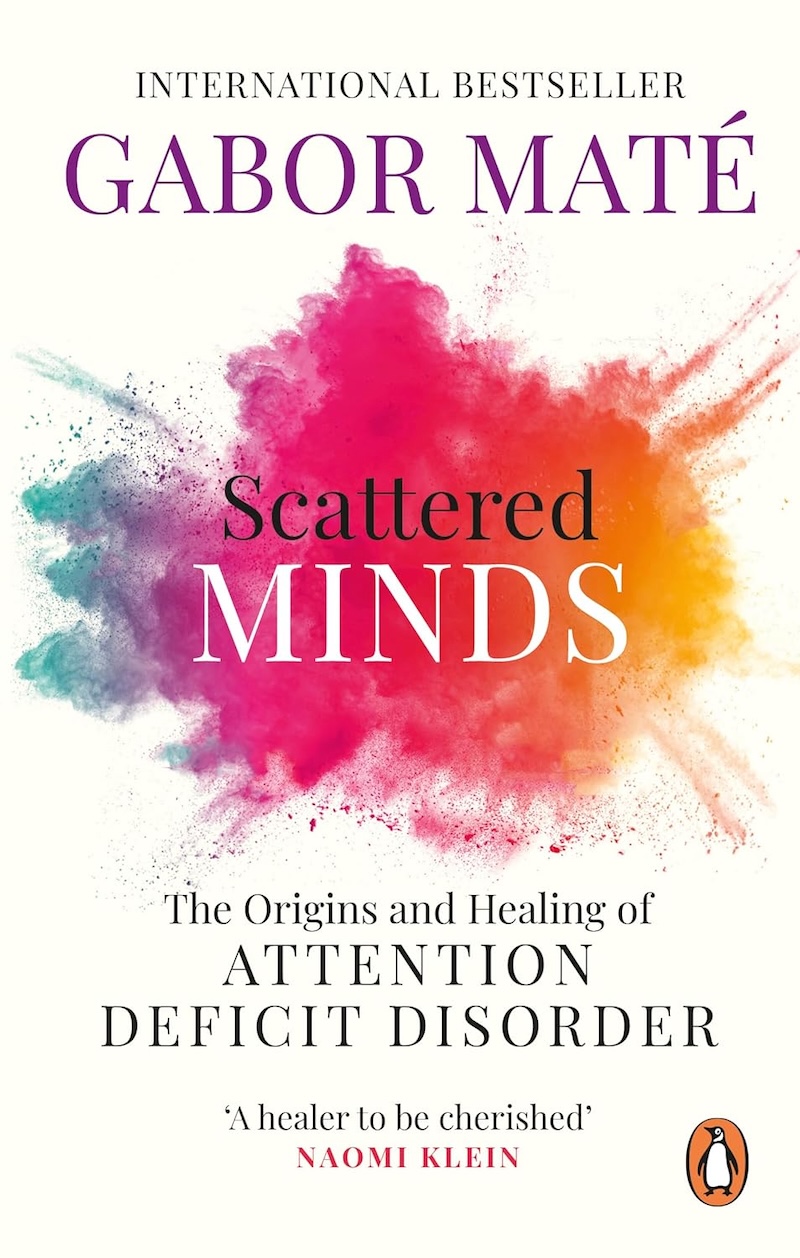
Scattered Minds by Gabor Maté
Why read the book?
Gabor Maté wrote Scattered Minds. He lives with ADD himself and worked as a doctor with children and adults who have it. Maté says ADD is not an inherited illness but a reversible impairment and developmental delay. Early childhood stress and poor attachment disrupt the brain circuits for attention, impulse control and emotional regulation.
The book mixes his personal story, patient cases and science. It explains why distractibility, restlessness and low motivation happen. Maté shows how society, parenting pressures and modern life make ADD more common. Readers learn that symptoms are not character flaws. The book came out in 1999 but still feels fresh. It challenges the idea that medication is the only answer. Maté gives hope that brains can keep developing even in adulthood.
He shares practical ways parents and adults can create calmer, more supportive environments. The book helps people understand themselves or their children with compassion instead of shame. Maté warns that ignoring emotional roots keeps the cycle going. Readers finish with tools to break it.
Favourite quote
So self-acceptance does not mean self-admiration or even self-liking at every moment of our lives, but tolerance for all our emotions, including those that make us feel uncomfortable.
What I Loved
Scattered Minds gives a kind and honest look at ADHD. Maté tells stories from his own life and from people he has helped. He shows how early stress shapes the brain without blaming parents. The book points out how shame and low self-esteem feed the symptoms. Maté talks about the difference between knowing what to do and actually doing it.
He connects ADD to bigger issues like stress in families and culture. The book makes you think deeply about attention, motivation and relationships. It calls for patience and unconditional acceptance. Maté writes in a clear, warm style that feels like a wise friend talking. His voice stays hopeful even when facing hard truths. The examples feel real because they come from lived experience. Readers sense the relief of finally being understood.
Maté looks at how small changes in how we relate can rebuild focus and calm. He notes tough moments but always offers a path forward. The book has parts on self-parenting for adults and supportive parenting for kids. It talks about leaders and systems that fail to see emotional needs. Maté gives real steps to create safety and connection. The end leaves you believing change is possible at any age.
Key Takeaway
ADHD is a reversible developmental delay rooted in early stress; healing comes through self-understanding, compassion and relationships that rebuild emotional safety.
Enjoyed this post?
Well, you could share the post with others, follow me with RSS Feeds and/or send me a comment via email.
Tags
Category:
Person:
Year: