Moby-Dick by Herman Melville
Why read the book?
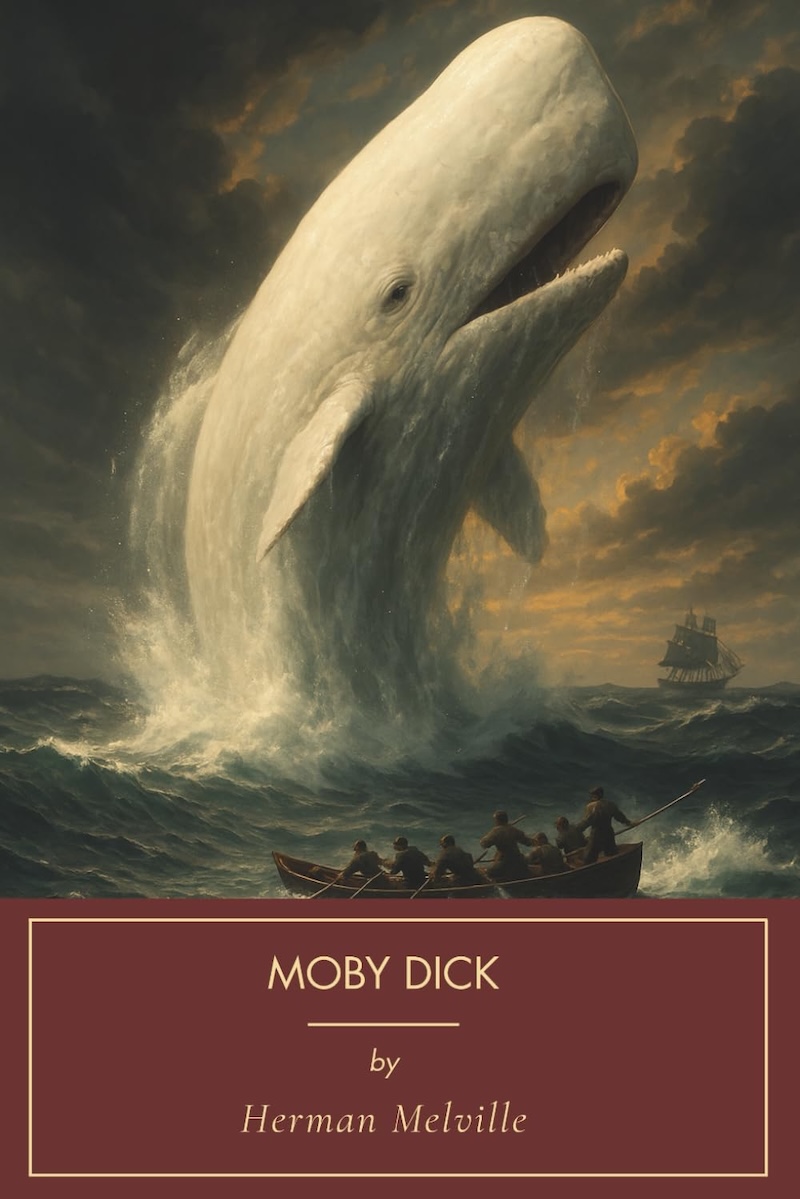
Herman Melville’s Moby-Dick follows Ishmael, a sailor who joins the whaling ship Pequod under the command of the monomaniacal Captain Ahab. Ahab seeks revenge on Moby Dick, the white whale that took his leg, dragging the crew into a doomed chase across the oceans.
Part adventure, part philosophical novel, and part encyclopaedia of whaling, it explores obsession, fate, the limits of human knowledge, and man’s place in nature. Told through Ishmael’s reflective voice, the book blends thrilling sea tales with deep meditations on life, evil, and the divine. It is one of the greatest American novels ever written.
Favourite quote
I know not all that may be coming, but be it what it will, I’ll go to it laughing.
What I Loved
Moby-Dick is an overwhelming, magnificent experience. Melville turns a simple revenge story into a vast meditation on everything human: the beauty and terror of the sea, the madness of pride, the mystery of evil, and the joy of camaraderie among the crew. The famous cetology chapters, far from slowing the book, create a hypnotic rhythm, like the ocean itself, while showing the whale as both creature and cosmic symbol.
Ahab’s Shakespearean fury, Queequeg’s noble friendship, Starbuck’s quiet conscience, and Ishmael’s calm, curious narration give the novel unforgettable voices. The prose swings from biblical thunder to gentle humour, from scientific detail to pure poetry. It demands patience, but rewards it with scenes of unforgettable power: the first sighting of the white whale, the typhoon, the final three-day chase.
Key Takeaway
Obsession can destroy the soul, yet the search for meaning, even in the face of an uncaring universe, remains the essence of being human.
Enjoyed this post?
Well, you could share the post with others, follow me with RSS Feeds, send me a comment via email, and/or leave a donation in the Tip Jar.
Tags
Category:
Genres:
Person:
Year: